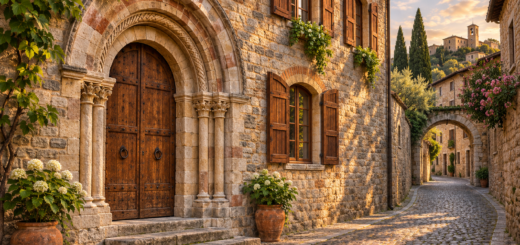
Reading a Historic Building Beyond Its Facade
A historic building records many decisions, including later repairs and changes of use. Its most decorative front may attract attention first, but quieter details can explain how people entered, worked, gathered and adapted the space over time.
Observe from public areas and respect access restrictions. Compare entrances, window sizes and changes in masonry. A blocked doorway or an uneven line of brickwork may indicate an alteration, although appearance alone cannot establish its date or purpose.
Look at the building’s relationship with the street. The height of a threshold, the width of a passage and the position of service entrances can suggest different kinds of movement. Treat these as questions to investigate, not automatic proof of a particular history.
Compare your observations with a reliable local record: an archive photograph, a heritage listing or a museum publication. Check when the source was produced. A later account may simplify a complicated sequence of construction and renovation.
Write down what is visible, what a source confirms and what remains uncertain. This distinction helps turn a pleasant walk into careful historical observation while leaving room for the people and uses that a facade alone cannot reveal.